Thursday, May 20, 2010


La cloaca

John Saxe-Fernández

En boga por la ruina de la antigua URSS y el crack de 2008, el término colapsos está de regreso, ahora en la fusión de sucesos jurídico-morales y ecológico-económicos: mientras se informaba sobre el derrame en el Golfo de México por el estallido de una plataforma de British Petroleum (BP), operada con Halliburton y Transocean, en el que se avistan, dice Robert Kennedy Jr., corruptelas de sexo, soborno y mentiras bajo auspicio de celestinas de la industria del gas y del petróleo y del mundo de las finanzas, el público se enteró de atroces y profusas ejecuciones en las guerras de Estados Unidos por el control de Oriente Medio, sede de 60 por ciento de la reserva de petróleo convencional.

El desplome jurídico-moral se dio cuando Seymour Hersh, el Pulitzer que destapó crímenes del régimen de Bush/Cheney como las torturas en Abu Graib y la existencia de un "avanzado plan de guerra contra Irán", reveló que el Ejército estadunidense realiza ejecuciones en el campo de batalla, en violación de códigos, leyes y las convenciones de Ginebra: “Se los digo desde ahora –dijo en Suiza–: una de las mayores tragedias de mi país es que el señor Obama mira al otro lado, porque de igual manera horribles cosas ocurren a los prisioneros, aquellos que capturamos en Afganistán”… "están siendo ejecutados en el campo de batalla. Es algo increíble lo que ocurre ahí y no se informa al respecto".

Ese sonoro silencio es porque los encargados de la política exterior y militar de Estados Unidos son responsables de crímenes de guerra imprescriptibles. La continuidad con Obama de las guerras de Bush en Irak y Afganistán está vinculada al empuje económico y político-electoral de las grandes corporaciones en la lista de Fortune, incluidas las firmas petroleras y decenas de los principales contratistas industriales y de "seguridad" del Departamento de Defensa (DdD), involucrados todos con bancos y firmas de inversión, en maniobras especulativas de alto riesgo.

El accidente de BP desató el metano del Golfo de México y el hedor de la cloaca que engendra colapsos ecológicos y cataclismos económico-militares. Según un informe del DdD, “…en 2012 la capacidad ociosa podría desaparecer totalmente y en fecha tan cercana como 2015, el déficit petrolero podría llegar a los 10 millones de barriles diarios”. “Mientras es difícil predecir con certeza los efectos económicos, políticos y estratégicos de ese déficit, es seguro que reducirá el crecimiento en el mundo desarrollado y en vías de desarrollo: un freno económico que exacerbaría tensiones no resueltas e impulsaría más rápido a estados frágiles o fallidos hacia el colapso… con fuertes y serios impactos económicos en China e India”.

Para Estados Unidos, el mayor consumidor de crudo, "los efectos serían devastadores", algo que no preocupa a la codiciosa oligarquía petro-financiera, entusiasmada con las grandes oportunidades que le ofrece el escenario de escasez para especular con "derivados", esos complejos y opacos productos usados para apostar en las fluctuaciones de los mercados financieros: las grandes firmas de Wall Street se coligan con las del gas y del petróleo para derrocar o modular toda regulación seria del capital financiero. Según Nick Nyhart, del Huffington Post, BP y las grandes petroleras de Estados Unidos integrantes del American Petroleum Institute, su gran lobby, han invertido 938 millones de dólares en ese cabildeo: “después de años de oponerse a regulaciones en la industria petrolera, que podrían haber evitado el desastre en la costa del Golfo, ahora BP lucha contra regulaciones de la industria financiera, que podrían haber prevenido el colapso económico, (cuyos efectos) todavía estamos sufriendo”.

BP, junto a ExxonMobil, Shell, Chevron, ConocoPhillips y Total se unen a Goldman Sachs, JP Morgan, Citigroup et al, en la Coalition for Derivatives End-Users, para mantener en tinieblas al mercado de derivados y lograr regulaciones aceptables, mientras, junto al peak oil, empujan al alza los precios del crudo y la guerra general.

http://jsaxef.blogspot.com

La tragedia griega y el eslabón débil del capitalismo


Como buen cónsul del imperio, hace dos o tres años, Francis Fukuyama estuvo de tour por los países de América Latina. En los argumentos que esgrim ía en sus disertaciones, anunciaba la buena nueva: el Consenso de Washington ha fracasado. O sea, aquel recetario impuesto a los países de la periferia por parte de las instituciones financieras: apertura de la economía, flexibilidad en los tipos de cambio y las tasas de interés, reforma fiscal, reducción del gasto público para la reducción de déficit fiscal, disciplina presupuestaria, apertura a la inversión extranjera, conversión del Estado en un Estado subsidiario, privatización de las empresas del Estado, desregulación de los mercados, no brindaron los resultados planteados porque los países que las aplicaron no siguieron las recomendaciones al pie de la letra.

Esas políticas con algunas variantes que hoy se están iniciando a implementar en los países de la semiperiferia y el centro del sistema de la economía-mundo, fueron impulsadas, inicialmente, en países pobres que constituyen el eslabón débil del capitalismo. Fueron políticas macroeconómicas implementadas en aquellos países que carecen de instituciones políticas sólidas y de un Estado de Derecho que permita la distribución equitativa de los bienes materiales generados a partir de la producción. Países en los que la tradición autoritaria en el ejercicio del poder pasa por alto el respeto de los derechos ciudadanos y, fundamentados en el clientelismo político exacerban la exclusión social.

La puesta en marcha de esas políticas no produjo un crecimiento económico que contribuyera a consolidar los regímenes democráticos recién iniciados en la década de 1980, como nos fue anunciado en los discursos de políticos y gobernantes demagogos. Pero sirvieron para desmantelar economías de países como México y Argentina.

Los resultados de la aplicación de esas políticas en los países latinoamericanos están a la vista, incremento desproporcionado de pobres, mayor concentración de la riqueza, expulsión de emigrantes hacia mercados laborales externos, déficit en los sistemas de salud y educación, mayor evidencia de la segregación social, exaltación desmedida al concepto individual, democracias carentes de contenido político por la ausencia de un Estado fuerte y mediador. Si a todo ello se suma el aumento de mafias articuladas al Estado, el narcotráfico, el trasiego de armas y de seres humanos, puede concluirse que el Consenso de Washington provocó un desastre para los países de la periferia del sistema de economía-mundo.

La tragedia griega que hoy presenciamos desde este lado del Atlántico, nos hace considerar que fue una tragedia anunciada. El drenaje de euros para llegar a una deuda tan abultada, solo podía tener un propósito: quebrar la economía de los griegos. Y como en América Latina en los años de 1980, el Banco Mundial y el Fondo Monetario Internacional, cual dioses del Olimpo, llegan al encuentro del país en banca rota y le ofrecen sus dádivas financieras para detener la tragedia. ¿A costa de qué? En Grecia no pueden pedir que devalúen la moneda, que abra la economía al libre mercado, que libere las tasas de interés porque pertenece a una zona económica más amplia. Pero si puede reducir el déficit fiscal provocado, según los economistas liberales, por la inversión y atención social. El Estado, según ellos, gasta más de lo percibe en impuestos.

Además, en Grecia para desmantelar el Estado de Bienestar y reducirlo a su mínima expresión, pueden seguir políticas de privatización del sistema de salud y educación. Privatizar el subsuelo griego sería una buena medida para esas instituciones financieras y así satisfacer las ansías de las corporaciones transnacionales en la extracción de minerales que pueda tener los griegos como reserva. ¿Pueden las sociedades europeas imaginarse privatizando la educación y liberar al Estado de la responsabilidad de fomentar el imaginario nacional en las nuevas generaciones? ¿O bien, privatizar el sistema de salud y que los europeos no vean reflejados sus impuestos en la atención médica que necesitan en su bienestar social? ¿Qué sucedería en esos países si la educación universitaria fuera privatizada?


Pero Grecia, ubicada en la semiperiferia de la economía-mundo, mantiene resabios del eslabón débil del capitalismo. La atención a sus ciudadanos no se diferencia significativamente de los países de la periferia, lo hemos observado en las imágenes de la prensa escrita y la televisión. Fuerzas policíacas dispuestas a reprimir las manifestaciones realizadas por el descontento que la tragedia ha provocado. Nubes de humo de gases lacrimógenos cubriendo las calles de Atenas, evidenciando posturas de intolerancia y ausencia de diálogo en la solución de los principales problemas que aquejan ese país. Los griegos están a tiempo de detener la tragedia y evitar que se convierta en un desastre social.

La cultura política griega ha mantenido una tradición autoritaria y reducir el Estado atenta contra las libertades democráticas, iniciadas también allí, en la década de 1970. El establecimiento de políticas macroeconómicas que privilegian el mercado por el mercado mismo va en contra del Estado de Derecho, porque las reglas del juego se aceptan, siempre y cuando no afecten los métodos de acumulación. Por eso, si en Grecia se insertan las políticas económicas liberales de desatención social, otros países europeos de similares condiciones se encuentran en peligro de formar parte de esa tragedia.

Volvamos al tour de Fukuyama. Cuando en sus disertaciones privilegiaba el respeto al Estado de Derecho como pieza clave para alcanzar resultados efectivos en aspectos sociales, Fukuyama no estaba preocupado por los niveles de pobreza de los países de la periferia o de América Latina, su preocupación coincidía con la preocupación de la geopolítica de los Estados Unidos. En los países de América Latina los gobiernos estaban tomando una dirección adversa a lo pensado, habían sido electos popularmente gobiernos con un discurso de izquierda y eso atentaba contra la seguridad de aquel país. Estos países, de nuevo, se estaban acercando a la revolución cubana.

En medio del desastre provocado por el Consenso de Washington, en América Latina se enarboló la bandera del populismo, tanto desde la derecha como desde la izquierda. La diferencia estriba en que la derecha empleo ese discurso para impulsar las políticas macroeconómicas derivadas de ese consenso, en tanto que la izquierda implemento políticas sociales para paliar el daño causado a miles de latinoamericanos con la reducción del Estado y las torturas provocadas con la mano invisible del mercado. Cabe la posibilidad de pensar el populismo latinoamericano como una consecuencia política de las medidas económicas para dejar libremente el actuar del mercado.

¿Es posible pensar que el populismo sea enarbolado en Europa? Cómo fenómeno existente en el discurso político, el populismo se da en países pobres como en países ricos. Además, en Europa, principalmente en Alemania, su existencia en el pasado trajo enormes consecuencias en el costo humano. Chantal Mouffe ha considerado que la derecha oportunista europea, ha empleado el discurso populista como medio en sus aspiraciones políticas. Por eso no resultaría extraño que surjan gobiernos populistas en reacción a las consecuencias del Consenso de Washington aplicadas en los países del sur de Europa. No obstante, el peligro radica en que esos gobiernos vayan acompañados de orientaciones fascistas.

Pasar sobre las leyes, crear a los inmigrantes como enemigos responsables de las condiciones de vida de los ciudadanos en cada país, implementar políticas que atentan la seguridad humana, explotar fuerza de trabajo infantil, agotar los recursos naturales, aceptar el narcotráfico, destruir la flora y la fauna tanto terrestre como acuática convierten al capitalismo en un sistema omnívoro. Y cual bestia apocalíptica, abrirá sus fauces y cuando globalmente haya destruido el planeta, se jalará la cola y se destruirá a sí mismo.

Rebelión ha publicado este artículo con el permiso del autor mediante una licencia de Creative Commons, respetando su libertad para publicarlo en otras fuentes.


http://rebelion.org/noticia.php?id=106209

México SA

Asalto cotidiano a usuarios de bancos

En México el sistema bancario es un oligopolio


Tanto se repite la historia, tantos son los discursos y exhortos acumulados, que la conclusión lógica es que nadie, absolutamente nadie de los que (se supone) toman las decisiones en el país tiene la más remota intención de poner fin al asalto cotidiano de que son víctimas los usuarios del sistema bancario que opera en México. Año tras año crecen las utilidades bancarias por margen financiero –la diferencia entre lo que cobran a los creditohabientes y lo que pagan a los ahorradores–, y la única reacción, tanto de las autoridades reguladoras como de los representantes populares, es una andanada de discursos conciliatorios, peticiones, súplicas y llamados de atención a los barones del dinero, quienes ni siquiera se dan por aludidos.

Banco de México, Secretaría de Hacienda, Comisión Nacional Bancaria y de Valores, Senado de la República, Cámara de Diputados y demás autoridades y representantes populares se dan por satisfechos, toda vez que acumulan un voluminoso inventario de discursos, estudios, iniciativas truncas, exhortos, pronunciamien- tos, llamados de atención, puntos de acuerdo y conexos, todos ellos con la atenta súplica a los banqueros para que, si son tan amables, bajen las tasas de interés que cobran a su clientela y dejen de exprimirla. Hasta allí, no más.

Concluido el periodo ordinario de sesiones, ahora toca el turno a la Comisión Permanente del Congreso, y en los trabajos de ayer sus integrantes (¡sorpresa!) exhortaron al Banco de México para que ordene a las instituciones bancarias disminuir el costo de las comisiones que cobran por el uso de cajeros automáticos a tarjetahabientes de otros bancos. El diputado federal del PAN, Ignacio Téllez, se manifestó a favor de que los bancos disminuyan el cobro en cajeros de otras instituciones, (porque) el Partido Acción Nacional también está a favor de este daño (sic) tan grave que causan las comisiones por uso de tarjetas, yo creo que es un tema que no escapa a ningún grupo parlamentario, eso saldrá por unanimidad sin duda alguna, pero sí es lamentable que la mayoría de las veces te entreguen contratos en letras muy pequeñas, dijo (El Universal).

Desde la reprivatización bancaria (concluida 18 años atrás) se escucha el humilde ruego de legisladores y partidos políticos para que los banqueros reduzcan intereses y comisiones a los usuarios del crédito (especialmente en tarjetas de crédito), y durante igual periodo las trompetillas de los barones del dinero se escuchan incluso antes de que aquellos concluyan el discurso o terminen de redactar el punto de acuerdo. Lo mismo sucede con las autodenominadas autoridades reguladoras del mercado financiero, aunque sus exhortos, peticiones y conexos suelen ser más descaradas y terminar en un qué le vamos a hacer, si así funciona este negocio. Y entre unos y otras, la clientela bancaria ya no siente lo duro, sino lo tupido (no tanto de los discursos como de los intereses y comisiones, que sí son reales).

Dos semanas atrás el Banco de México se mostró feliz, porque, según dijo, logró meter en cintura a los agiotistas institucionalizados (léase los bancos y sus dueños), porque a partir del 5 de mayo de 2010 entraron en vigor las disposiciones que emitió relativas al cobro de comisiones por operaciones de retiro de efectivo y consulta de saldo en cajeros automáticos, cuando la tarjeta utilizada ha sido emitida por un banco distinto al que opera el cajero. Lo consideró un éxito rotundo, cuando en realidad lo único que logró fue que el asaltado conociera anticipadamente cuánto le robará el asaltante, es decir, no evitó el asalto; simplemente lo cuantificó. Y como ésta, decenas de iniciativas y conexos para proteger al usuario.

Por ejemplo, para comenzar bien el año la trasnacional HSBC decidió incrementar nueve puntos porcentuales la tasa de interés para tarjetahabientes cumplidos (de un plumazo), y lo hizo justo cuando el micrófono oficial no presume otra cosa que lo peor ya pasó y que la recuperación es un hecho. Qué bueno que sea así, porque ello fortalece la tesis de que México vive tiempos de bonanza –versión oficial–, por mucho que sea indiscriminado el aumento de intereses en las tarjetas de crédito, aunque, eso sí, aderezado con decenas de discursos, exhortos, peticiones y puntos de acuerdo para que la banca las reduzca. Y así han transcurrido 15 largos años, cuando menos, y la clientela ya presenta síntomas cianóticos.

Para documentar la efectiva acción de autoridades y legisladores, va el siguiente repaso temático elaborado –paradójicamente– por la Cámara de Diputados: la estructura del sistema bancario en México presenta rasgos de un oligopolio, debido a que existen múltiples competidores en este mercado, pero los servicios financieros están concentrados en pocas firmas bancarias. Con el objetivo de maximizar sus utilidades, ha introducido dos factores que ponen en riesgo el sistema crediticio del país: el otorgamiento indiscriminado de tarjetas de crédito y, como consecuencia, el incremento de la cartera vencida. El análisis del otorgamiento de crédito bancario del mercado de las tarjetas de crédito nos revela que las familias y las empresas del país no han gozado de los beneficios de una eficiente intermediación financiera, porque el diferencial entre la tasa de captación del ahorro y la tasa de colocación del crédito permanece en niveles altos, comparados con los observados internacionalmente, es decir, son incompetentes.

En el país, el mercado de las tarjetas de crédito opera bajo una estructura de mercado oligopólico, que favorece la concentración de la colocación de este tipo de crédito en pocas instituciones de banca múltiple. Dicho mercado mantiene tasas de interés altas, incompetentes internamente y en comparación con las existentes en el mercado internacional. La banca es la única que puede emitirlas, porque goza de mucha protección. Esto ayuda a explicar por qué el margen de intermediación financiera de este servicio ha permanecido muy por arriba de los estándares internacionales. Eso sí, por discursos no paran.

Las rebanadas del pastel

Si de improductivos exhortos se trata, allí está el de Felipe Calderón ante Barack Obama en materia migratoria; es igual a los expresados por sus antecesores en la residencia oficial a los ex inquilinos de la Casa Blanca, de tal suerte que los resultados no tienen por qué ser distintos.


Astillero

¿Promoción o castigo?

Campaña espectacular

Diego, viable

Odio de Los Pinos


El Partido Acción Nacional ha sumado un ingrediente de suspicacia al de por sí muy enrarecido ambiente que rodea el extraño secuestro de Diego Fernández de Cevallos. Al mismo tiempo que autoridades federales y estatales tratan de instalar una suerte de velo a medios de comunicación para que no difundan información nueva del incidente sucedido en uno de los ranchos del poderoso abogado queretano, la directiva del PAN en esa entidad ha emprendido una campaña de propaganda que no hace eco de esas exhortaciones gubernamentales a guardar silencio para no entorpecer eventuales negociaciones, e incluso complicarlas hasta llevarlas a riesgos de muerte.

Por el contrario, como si de una estrategia electoral se tratara, se han comenzado a instalar anuncios del tamaño llamado espectacular con una fotografía del ex candidato presidencial que ocupa casi la mitad del espacio disponible, en actitud propicia para el proselitismo comicial y una frase que igual suena a solidaridad inmediata en la desgracia que a adhesión futura rumbo a las urnas: Diego, estamos contigo. Y, de remate, la frase que cualquier publicista acomodaría a cualquier candidato en busca de votos: Por un Querétaro seguro y en paz, elaboración retórica que al manifestar solidaridad de esa manera a un hombre en cautiverio suena a aprovechamiento político, a búsqueda de ganancia partidista, a descarada conversión de sentimientos humanitarios en estrategia electoral.

Contrastante de manera grotesca, por ejemplo, con la indefendible autocensura que Televisa se aplicó en oscuros términos ópticos (que a la vez resultan muy claros), habrá de verse si la actitud de la cúpula del panismo queretano es compartida y secundada por la jefatura nacional de ese partido, es decir, por el propio Felipe Calderón, que es quien en realidad dicta las órdenes que puntualmente cumple su demeritado y, en razón de ello, sostenido dependiente, César Nava. Si la campaña de difusión de la figura de Diego continúa, es válido especular acerca de eventuales propósitos de retorcida construcción de una candidatura de emergencia panista rumbo a 2012 que el PRI apunta a ganar sin mucha competencia, según los escenarios actuales.

En realidad, el llamado Jefe Diego es casi la única opción electoral que podría enfrentar con buenos augurios la aplanadora tricolor, en particular por su talante bravucón y declamatorio que resultaría atractivo para una sociedad necesitada de esperanzas de firmeza y pragmatismo extremos, como puede ofrecer Fernández de Cevallos, único político de primer nivel que abiertamente es capaz de defender los postulados del conservadurismo más rancio y de erigirse en impulsor de mano dura para restituir la seguridad y la paz mencionadas en sus anuncios espectaculares queretanos. No es menor el dato de que el abogado desaparecido forma parte del entorno de fiabilidad transpartidista con que el verdadero jefe, Carlos Salinas, libró su sexenio de origen impugnado pero luego tersamente convalidado por el panismo que vio perecer a Manuel J. Clouthier y emerger a una especie de cogobernante amable, aunque exigente en términos de ganancias políticas y económicas personales, en la figura del a partir de allí llamado Jefe Diego. Salinas tendría de esa manera en su mano la posibilidad de manejar dos cartas centrales de la contienda de 2012 si es que en el PRI quedara su ahijado Enrique Peña Nieto y en el PAN su socio Fernández de Cevallos.

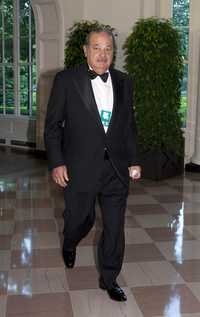
Foto
ENCUENTRO EN WASHINGTON. Llegada de Carlos Slim a la cena de Estado que Barack Obama ofreció a Felipe Calderón, en la Casa Blanca
Foto Reuters

Pero justamente esas posibilidades presidenciales del esfumado político fumador de puro podrían haber actuado en su contra, sabido como era que en su entorno se hablaba de iniciar en fecha próxima algún sondeo o promoción abierta de su precandidatura y sabida como es la paradójica animadversión que hacia él ha mantenido largamente un michoacano, ahora en el poder, que le considera un corrupto litigante que ha traficado con influencias para hacerse de riqueza, a pesar de que en los momentos difíciles de 2006 le pidió asesoría legal y política y a pesar de que, por esas mismas carencias de personal y oficio para enfrentar las crisis, haya echado mano de dos personajes pertenecientes al cártel del Jefe Diego para ocupar las carteras de Gobernación y la Procuraduría General de la República. A las valoraciones propiamente políticas podrían agregarse versiones como la publicada el pasado lunes por el columnista Roberto Rock en El Universal (texto que este tecleador no pudo encontrar ya en el archivo de Internet de ese diario, aunque sí en http://bit.ly/b2Xnwo mediante Google): El amor-odio entre el Presidente y Fernández de Cevallos encierra una paradoja en el breve lapso de una década: se asegura que durante una reunión privada en 1996, Diego puso en duda la hombría de Carlos Castillo Peraza, quien estaba en proceso de ceder el liderazgo del PAN nacional en manos de su pupilo político, Felipe Calderón. Este último, furioso, habría desafiado a Diego a liarse a puñetazos.

¿Qué sucedió realmente con el controversial abogado y probable precandidato presidencial? ¿Su desaparición es una treta para convertirlo en el aspirante a 2012 de un panismo reunificado? O, por el contrario, ¿su ausencia es un castigo, preventivo o definitivo, por sus ácidas críticas al calderonismo y por sus pretensiones futuristas? Los anuncios espectaculares, en Querétaro o en todo el país, irán apuntando, con su cancelación o proliferación, los rumbos de esta historia de poderes oscuros.

Y, mientras Calderón y Obama hacen discursos y cumplen con rituales escenográficos, el primero incluso hablando de mensajería narcotraficante alterna y asegurando respecto a DFC que no hay evidencia de que se trate de un secuestro porque, de acuerdo con la investigación, no tenemos evidencia, ¡hasta mañana, con el ataque armado contra el experto en guerra sucia, el general en retiro Mario Arturo Acosta Chaparro, en un raro asalto cometido cerca de oficinas de atención ciudadana de la SSP de García Luna!


Johann Hari: Islamists, their victims, and hypocrisy

On the day we allowed two al-Qa'ida members to remain, two other young people waited for the police to see them, and hand them over to men who will kill them

Should Britain be giving refuge to Islamic fundamentalists, while sending the men and women who have been brave enough to challenge Islamism back to their deaths? This sounds at first like a straw man question. Who would ever suggest such a policy? Who would defend it? But the facts suggest we are doing it, every day.

On the day when the Special Immigration Appeals Commission decided to allow two Pakistani men they say are al-Qa'ida members to remain in London this week, two other young people were waiting for the British police to seize them and hand them over to men who will kill them. Their "crime" is to resist Islamic fundamentalism, in the name of human rights.

Kiana Firouz is a 27-year-old woman who grew up in revolutionary Iran, and slowly realised that if she ever acted on her natural impulses – to kiss and hold and love another woman – she would be subjected to a hundred lashes. If she did it again, she would be hanged, in a public square, before a jeering mob. But Kiana believed the freedom to fall in love was more important than her own safety. She stood up in Tehran and made a film showing that there are gay people there just as there are gay people everywhere, and they deserve to live and love freely. The police began following and threatening her. She knew what had happened to other gay Iranians – a bullet, a ditch, a lynch mob – so she came to a country she associated with freedom for gay people, Britain, and appealed to us to save her life.

We refused. The Home Office told her to go back to Iran and be "discreet" about her sexuality. But the law in Iran doesn't say discreet lesbians get out of jail free. They are tortured and killed just the same.

Dr Amit is a 29-year-old Pakistani who has asked me not to use his surname, for reasons that will become clear. He grew up in the Punjab, but since he was a young child, he found the religion that was relentlessly promoted by the state and the mosque and the schools absurd. Where was the evidence for this "God"? Why should we follow "His" dictates?

In 2008, he began to write a series of articles online, criticising Islam and all religions. He knew that people are jailed and tortured and executed for critically analysing Mohammed or the Koran or the power of institutionalised Islam within Pakistan, but, again, he believed somebody had to ask these questions, or no progress would ever happen. He knew the police would come looking. So he came to a country whose philosophical and intellectual traditions of scepticism towards religion he revered, and asked us to save his life.

We refused. He was told to go back and be "discreet" in his opposition to religious fundamentalism. But his articles are there, online, for the not-so-secret police to read and torture him for. By the time you read this, he will have been forced on to a plane. He told me: "I will try to hide myself somehow – change my name, not contact anyone I knew before. Maybe then I can survive. I'm terrified."

The courts have condemned Kiana and Amit, but at the same time, they have given a reprieve to Abid Naseer and Ahmed Faraz, who they say are strong al-Qa'ida sympathisers. (Remember though: this was a Kafka-trial where the defendants were not allowed to hear the evidence against them.) The judges ruled they cannot be deported to Pakistan, because there is a serious risk they could be tortured or executed by the Pakistani authorities.

Let's leave aside the repellent double standard for a moment and, for the sake of argument, assume the courts are correct about their affiliations. It is instinctively maddening to have to allow people to remain in Britain who despise many of the great things about this country – freedom for women and gay people and freethinkers – and pine for a theocracy that negates it all.

But that does not mean it is wrong. Would you ever hand a human being over to a torturer who was waiting with a blow-torch and a pair of pliers to take them apart? I doubt it. Our government mustn't do it either. No matter how despicable a human being is, they must be protected from torture and murder. That's why we can't send them back – although we should, of course, put them before a real trial immediately if they were involved in plots to commit murders of their own.

Far from showing us to be weak in the face of Islamism, this would show true strength. The Islamists say we are an empty materialist shell of a society, a brothel that believes in nothing but our own self-gratification. What better refutation is there than to say – here's what we believe in. We believe that torture is absolutely wrong. We believe it so strongly that even you – you, who hate us, and want to kill us – are protected from it.

This approach is far more effective than the neoconservative screeching for the water-board and the B-47. When I interviewed the growing movement of young Muslims in Britain who had been jihadis and trainee suicide bombers but have recanted and are now arguing for democratic values, I was struck by one thing. Every time we behaved like actors in an Osama Bin Laden rant-tape – by torturing and killing civilians in illegal wars – they became convinced he was right and resolved to kill us back. But when we refused to play to that script, doubt crept in.

To give one example of many, Majid Nawaz was in prison for being part of a hardcore Islamist plot to try to topple the governments of Egypt and Pakistan and seize its nukes – but when Amnesty International campaigned to protect him from torture, he realised the "Infidel" were rescuing him, because we have strong moral principles of our own. Now he is one of the most articulate campaigning enemies of Islamism. Of course, few Islamists will recant – but they are stripped of some of their most powerful recruiting tools and intellectual reinforcements when we sincerely oppose torture and murder.

So, yes, Naseer and Faraz should be kept safe from torturers and tried here because it is the right thing to do, and because it shows why the liberal way – if we follow it, instead of Bushite lunacies – is far better than their way.

But if we are going to protect them, how can we possibly not protect the people who are brave enough to stand up in Iran and Pakistan to denounce everything Islamist thugs try to force on innocent people? This isn't just about basic humanity. It is in our interests, too. There is a battle of ideas going on in Muslim societies between fundamentalists, and sane people who are happy to live alongside people who are different. At first, voices for secularism will be intimidated and small and scattered, as they were in the history of our country. But over time they will prick holes in fundamentalist certainties and bleed them. The more the fundamentalists are challenged – by their own countrymen, in their own language – the safer we become.

Brave, bold voices like Kiana's and Amit's do more to undermine Islamic fundamentalism than a thousand bomber-planes that only vindicate the Bin Laden narrative for so many. By sending these remarkable dissidents to die, we aren't only betraying them – we are endangering ourselves.

j.hari@independent.co.uk; twitter.com/johannhari101

More from Johann Hari


Leading article: An inconveniently persistent truth

Thursday, 20 May 2010


It has been hard work in recent times to get the world to take seriously the dangers posed by global warming. Those who have been persuaded, through misguided short-term self-interest, to deny the reality of climate change, have had succour from a number of sources.

The scandal surrounding the leak of private emails from the Climatic Research Unit at the University of East Anglia was deeply damaging with its allegations that scientists fudged and fiddled the figures to bolster the case for international action. So too was the fiasco in which an unsubstantiated claim that the Himalayan glaciers could melt away by 2035 was allowed to find its way into the 2007 report of the Intergovernmental Panel on Climate Change. And the fact that the challenge of global warming was scarcely mentioned by any major political leader during the general election campaign has not helped. All this has been grist to the mill of the climate-change deniers.

Yet the inconvenient truth is that, whatever errors or over-statements individuals may make in this debate, the overwhelming body of climate science still shows that man-made climate change is real. Our report today, of solid and robust research measuring changes in temperature in our planet's great oceans and seas, demonstrates that. The satellite and float technology involved is producing evidence from a wide area. This sets in context minor disputes about the reliability of data from Chinese weather stations and other squabblings. The temperature of our deep waters does not fluctuate in the way that temperatures do on land, where they are subject to the vagaries of weather as well as urban heating.

There is a key difference between weather and climate, and the temperature of the seas is an important indicator of that. And the water in our deep seas is warming. Add to that the recent evidence from Lake Tanganyika – which was recently shown to be warmer than at any time for at least 1,500 years – and the serious evidence is all pointing in one direction only.

It may well be that heightened anxiety over the massive oil leak in the Gulf of Mexico will dispose the public to take the environment more seriously for a while. But ups and downs in public awareness must not be what determines the seriousness with which this problem is addressed. Climate change represents a serious challenge to human survival. Our political leaders must not be allowed to forget that.

Panic stalks global markets after German short-selling ban

Sentiment further hit by Chancellor's comments on euro and demands for tough action on speculators

By James Moore, Deputy Business Editor

Thursday, 20 May 2010

Financial markets around the world shuddered yesterday after Germany's surprise decision to ban so-called "naked" short-selling of shares was followed by a warning that the euro was "in danger" by German Chancellor Angela Merkel.

The move sparked a panic, wiping billions from the value of shares while the euro hit a four-year low against the dollar, dipping beneath $1.215 before later recovering to $1.232. Said one trader: "The feeling is, what do they know that we don't?"

That sentiment led to a stampede for safety that wiped 149.26 points from the FTSE 100, which closed at 5158.08, a fall of 2.81 per cent. Germany's main stock index, the DAX, lost 2.72 per cent while the CAC 40 in France fell by 2.92 per cent. The sell-off was also felt on the other side of the Atlantic. The Dow Jones Industrial Average was at 10391.54, down -119.41 points or 1.14 per cent, by lunch time in New York.

But bond prices rose on the news, which meant that yields fell and the cost of borrowing to Germany and even to Britain, decreased. Ten-year UK government bond yields moved down 6 basis points from 3.69 per cent to 3.63 per cent. German debt reacted in the same way with 10-year bund yields falling by 8 basis points from 2.82 per cent to 2.74 per cent.

The ban imposed by German financial regulator BaFin prevents "naked" short-selling, a risky type of bet, of euro-denominated government bonds. The ban also applies to shares in the country's 10 most important financial institutions and to some credit default swaps. BaFin said it was prompted by "extraordinary volatility of the bonds of eurozone states" amid mounting concerns about possible "speculative" attack by hedge funds on the debt of the eurozone's weaker members, particularly the so called "Club Med" countries of Greece, Spain, Portugal and Italy.

In addition to warning that the single currency was in danger, Ms Merkel urged speedy action to stop what she called market "extortion". The German Chancellor said the EU needed a process for "orderly" insolvency of members and recommended tough action against "notorious deficit sinners" in the eurozone.

That could include measures such as withdrawing voting rights. Ms Merkel told the German Parliament in Berlin: "Above all, what's necessary is to develop a process for an orderly state insolvency... with that we would create an important incentive for eurozone member states to keep their budgets in order."

However, while the ban was intended to curb the activities of speculators, whom Germany fears have been running rampant across the continent, which has sowed instability and causing wild gyrations in markets, it was responsible for some wild gyrations of its own.

But economists and traders were sharply critical of the ban, warning that it would have little real impact in the absence of co-ordinated action from other financial centres and had served to make a bad situation much worse by shattering wafer-thin confidence.

David Page, economist with Investec, said: "There's been an all too predictable reaction to what was an unpredictable move from the Germans. There is still a hive of uncertainty in the markets regarding eurozone debt. Germany has made a slightly oddball move that suggests that it is worried about debt. It is unlikely to achieve its aims because what it has done is heighten the uncertainty. The only upside is that the eurozone bond spreads haven't risen by that much."

Manoj Ladwa, senior trader at ETX Capital, said: "Angela Merkel's knee-jerk reaction to ban speculators from short-selling debt has sent the markets into a tailspin. The reverberation of her decision is likely to have a serious negative impact on not only the euro, but also other European countries who may impose a similar restriction."

David Buik, partner at BGC Partners, said: "This is the most insane thing I have heard of since Noah left the Ark. It cannot achieve anything because it can still by done in London, in Paris, in New York. But what it has done is put the markets in a real spin. The problem is they are really sensitive at the moment and sentiment-driven and something like this, which is unexpected and out of the blue, can really knock sentiment."

Jeremy Batstone-Carr, analyst at Charles Stanley, said the ban's motivation was political: "The timing of the move is significant insofar as it comes shortly before the German parliament initiates the debate on the bill to authorise the €123bn German contribution to the €440bn emergency support fund for the indebted European nations."

While all major parties appear in favour of this, many Germans remain deeply unhappy.

Naked shorting: A speculative gamble

Naked short selling sounds like a bizarre form of gambling, and in many ways, that is exactly what it is.

Short selling shares or bonds is a long-established practice in financial markets. It works by a trader borrowing shares from an investor – typically a bank or an insurer – for a fee. The trader then sells the shares (which are returnable on demand) on to the open market. This is done in the hope that they will fall in value. The trader can then buy them back at a lower price to return them to the original owner at a profit.

Naked shorts, however, add an additional complication. A naked short occurs when a trader sells a share, or a bond, before they have actually been borrowed. With the help of intermediaries, this can be done with shares or bonds or even foreign exchange.

One of the problems with "ordinary" short selling is that to accomplish it, you need to find someone to lend you the stock. But there are many institutions that are unwilling to lend. So, during periods of exceptional volatility in the markets and when people are trying to short companies whose shares are tightly held, naked shorting comes in.

A naked shorter opens up a sell order usually before even checking that there is someone to borrow the stock from. But the order appears on screens around the City anyway. As long as they can ultimately secure supplies of the stock (and most of the time they can) the trade goes through. When a large number of people do this, a rush of sell orders appear on screens. Buyers run scared and the price tumbles. It's seat of the pants stuff and doesn't always work, but when it does, prices can fall spectacularly. This is what is known as a "speculative attack" and is what has regulators in Germany so upset.

Teachers Facing Weakest Market in Years

PELHAM, N.Y. — In the month since Pelham Memorial High School in Westchester County advertised seven teaching jobs, it has been flooded with 3,010 applications from candidates as far away as California. The Port Washington District on Long Island is sorting through 3,620 applications for eight positions — the largest pool the superintendent has seen in his 41-year career.

Even hard-to-fill specialties are no longer so hard to fill. Jericho, N.Y., has 963 people to choose from for five spots in special education, more than twice as many as in past years. In Connecticut, chemistry and physics jobs in Hartford that normally attract no more than 5 candidates have 110 and 51, respectively.

The recession seems to have penetrated a profession long seen as recession-proof. Superintendents, education professors and people seeking work say teachers are facing the worst job market since the Great Depression. Amid state and local budget cuts, cash-poor urban districts like New York City and Los Angeles, which once hired thousands of young people every spring, have taken down the help-wanted signs.

Even upscale suburban districts are preparing for huge levels of layoffs. School officials and union leaders estimate that more than 150,000 teachers nationwide could lose their jobs next year, far more than any other time, including the last major financial crisis of the 1970s.

Juliana Pankow, who just graduated from Teachers College at Columbia University, has sent out 40 résumés since January. A few Saturdays ago, she went to a school in Harlem because she heard the principal would be there (she was invited back to teach a demonstration lesson, but it may be for naught since the city has a hiring freeze). Now, Ms. Pankow said she might have to move back in with her parents in Scarsdale, N.Y., and perhaps take up SAT tutoring.

“I can’t think of anything else I’d rather do,” said Ms. Pankow, 23, as she waited outside the principal’s office at Pelham Memorial last week, among 619 people applying for one English position. “Which is a problem, because I might have to do something else.”

At Teachers College, so many students like Ms. Pankow are looking for work that two recent job fairs attracted a record 650 students and alumni, up from 450 last year. Last month, the college added a job fair focusing on schools in Harlem.

But job postings are down by half this year, to one dozen to two dozen a week, mostly in charter schools, said Marianne Tramelli, the college’s director of career services.

Charter schools, which are publicly financed but independently run, are practically the only ones hiring in New York and elsewhere because of growing enrollments amid expanding political and economic support for school choice. Even so, they do not have nearly enough jobs to go around.

In New York, where the Success Charter Network is hiring 135 teachers for its seven schools in Harlem and the Bronx, some of the 8,453 applicants have called the office three times a day to check on their status. Veteran teachers have also offered to work as assistant teachers.

“It’s heartbreaking — there’s much more desperation out there,” said Eva S. Moskowitz, a former councilwoman who is the network’s founder and chief executive.

KIPP, another charter school network with 82 schools nationwide, has received 745 applications since January at its seven schools in the San Francisco Bay Area, compared with 385 last year.

At the University of Pennsylvania, most of the 90 aspiring teachers who graduated last weekend are jobless. Many had counted on offers from the Philadelphia public schools but had their interviews canceled this month after the district announced a hiring freeze.

“We’re trying to encourage everyone to hold on,” said Kathy Schultz, an education professor at Penn. “But that’s very difficult because students have taken out loans and want to be assured of a job.”

Michigan State University has pushed its 500 teaching graduates to look out of state. As local jobs have dried up, it started an internship program in Chicago, a four-hour drive from campus. Professors now go with students to the annual campus job fair to make sure they do not hover around the Michigan tables, but walk over to, say, North Carolina, Texas or Virginia.

“We have a culture of people wanting to stay here and teach where they went to school, but we also want them to get jobs,” said Suzanne Wilson, the chairwoman of the department of teacher education.

Along with five other former teachers, Jade Stier, 27, finally gave up and enrolled in a nursing program last fall, after three years of looking for an elementary school job. She sent out hundreds of résumés, only to land one interview a year. She settled for working as a substitute teacher, earning $85 a day with no benefits.

“Spending $50,000 for an education you can’t use is really frustrating,” Ms. Stier said. “I definitely miss teaching, but I felt like I had no other choice.”

If there is an upside to the shortage of teaching jobs, it is that schools now have their pick of candidates.

Teach for America, which places graduates from some of the nation’s top colleges in poor schools, has seen applications increase by nearly a third this year to 46,000 — for 4,500 slots. From Ivy League colleges alone, there are 1,688 would-be teachers.

Here in Pelham, a well-regarded district where teaching salaries range from $50,000 to $134,000, high school administrators and teachers have spent recent weeks winnowing applicants’ résumés. Candidates with grade point averages below 3.0 were eliminated (3.3 in some departments), as were those who missed the April 30 application deadline. Almost 200 were invited for interviews.

“It’s very difficult,” said Jeannine Clark, the high school principal in Pelham. “More so than in years past because there are so many very qualified candidates.”

While Ms. Clark and the English supervisor were meeting with prospective teachers last week, candidates for the social studies job were down the hallway typing a 40-minute timed essay on the French Revolution. Upstairs, interviews for physics and biology teachers were being conducted.

“People will come in here begging for anything,” said Dennis R. Lauro Jr., the superintendent, who started closing his office door this year because out-of-work teachers would drop in unannounced to hand him résumés. “We’ve never seen these kinds of numbers before.”

Top candidates will be asked to return several more times to meet with Dr. Lauro, parents and students and to teach a demonstration class.

Ms. Pankow is hoping she will be among them.

“It would be unbelievable,” she said. “I would love it here, but I’m not necessarily putting all my eggs in this basket.”


Michelle Obama Hears Immigration Plea From Girl Worried About Deportations

15 hours ago


Lynn Sweet

First lady Michelle Obama and Margarita Zavala, the wife of President Felipe Calderon of Mexico, were visiting a Washington-area elementary school Wednesday when they heard unexpectedly from a little girl worried that some people -- maybe, just maybe even the youth's mother -- could face deportation one day. It was an extraordinary moment.

The child told Mrs. Obama, "My mom said -- my mom said that -- I think that she says that Barack Obama is taking everybody away that doesn't have papers."

Replied Mrs. Obama, "Yeah, well, that's something that we have to work on, right? To make sure that people can be here with the right kind of papers, right? That's exactly right."

The girl then said, "But my mom doesn't have . . ." and the word she seemed to say was papers.

Mrs. Obama said: "Yeah, well, we have to work on that. We have to fix that, and everybody has got to work together in Congress to make sure that that happens. That's right."

The exchange came as the two women's husbands, President Obama and Calderon, grappled with the issue of illegal immigration in the United States, with the already divisive issue turning red hot with the passage of a new law in Arizona allowing the police to ask people to show papers proving they are in the United States legally.

Mrs. Obama and Mrs. Zavala saw each other last month in Mexico City and reunited on Wednesday when Mexico's first couple arrived for a state visit.

The serious turn from the youngster came in the midst of an event intended to emphasize healthy eating and exercise, causes for both Mrs. Zavala and Mrs. Obama, with reducing childhood obesity Mrs. Obama's signature issue.

After the White House arrival ceremony on the South Lawn -- the first outdoor arrival ceremony of the Obama administration, complete with a 21-gun salute and both presidents reviewing U.S. troops -- Mrs. Obama and Mrs. Zavala motorcaded to the New Hampshire Estates Elementary School in the Washington suburb of Silver Spring, Maryland.

The women entered a gym filled with 14 second-graders and a banner on one wall that said, "Welcome, Mrs. Obama! Bienvenidos, Sra. Zavala!" The women played games with the children. Mrs. Obama and Mrs. Zavala skipped, hopped and ran around a bit with a gym teacher guiding the play. At one point everyone formed a circle and grabbed hold of an end of a big, colorful parachute filled with balls. When they "made waves," the balls tumbled out. The activity was a way for the gym teacher to talk about teamwork and the heart, veins and arteries.

Mrs. Obama was wearing a Calvin Klein raspberry dress; over her dress, Mrs. Zavala had on a blue raincoat, which she removed when all the activity began.

After about 25 minutes, Mrs. Obama and Mrs. Zavala drew the children into a circle while the adults sat on folding chairs. When the children looked at the cameras and reporters standing along a gym wall, Mrs. Obama noticed and explained, "They follow us around."

Speaking first, Mrs. Obama told the children, "You are so blessed to be in a school like this that's focusing and giving you this kind of information, and making it fun, right? Because what you see is that exercise and play -- that's all exercise is, it's a bunch of play. It's just games. But you get your heart moving, and you've got to do that."

As often happens when Mrs. Obama is with children, they wanted to know about her daughters, Malia, 11, and Sasha, 8.

When Mrs. Obama was told by a student about playing Wii, Mrs. Obama knew the product.

"The Wii Fit? Yep, Malia and Sasha have that, too," she said. After the chat turned to riding bikes, Mrs. Obama was asked if her daughters exercise.

"They do. They do it at school like you do, and they do it at home," and they ride bikes too. Asked if she exercised, she said "every single day," unless she was really busy. And what about Mr. Obama?

"He exercises every morning, every single morning."

After the gym, Mrs. Obama and Mrs. Zavala went to the cafeteria, where the children were eating a healthy lunch, family style.

The children sang a song before eating:
I watch my table manners,
I sit up nice and straight,
I say please and thank you and please put more on my plate,
I do not talk while chewing,
I do not play with food,
We enjoy lunch together, because our manners are so good!

Expertos de hospital de París realizan estudio, en el que participaron 150 mil franceses

Los bebedores moderados, con mejor salud que los abstemios

La mayoría de los beneficios, sin embargo, provienen de asociaciones indirectas con el alcohol, como menor nivel de estrés, mayor interés en la actividad física y mejor estatus social, explican

Reuters
Periódico La Jornada

Jueves 20 de mayo de 2010, p. 2

Londres, 19 de mayo. Las personas que toman cantidades moderadas de alcohol tienen mejor salud en promedio que los abstemios, dijeron científicos franceses el miércoles.

Los investigadores hallaron que la mayor parte de los beneficios no son resultado directo del alcohol, sino de asociaciones indirectas como menor nivel de estrés, mayor interés en la actividad física y mejor estatus social.

El consumo moderado de alcohol es un poderoso indicador de alto nivel social, un estatus superior en la salud general y menor riesgo cardiovascular, dijo Boris Hansel, del Hospital Pitie-Salpetriere, en París, que lideró el estudio.

Chavela Vargas - En el último trago

El experto enfatizó, sin embargo, que el trabajo no demostró asociaciones causales y no debe usarse de evidencia para promover el consumo del alcohol.

El exceso de beber está relacionado con la enfermedad crónica del hígado, varios cánceres, intoxicación por alcohol, síndrome de alcohol fetal y enfermedad cardiaca. El alcohol es causante de 2.3 millones de muertes por año en todo el mundo, de acuerdo con la Organización Mundial de la Salud (OMS).

Hansel y su equipo estudiaron a casi 150 mil franceses y los dividieron en cuatro grupos: los que nunca habían tomado, los bebedores livianos (los que tomaban menos de 10 mililitros por día), moderados (entre 10 y 30 mililitros por día) y fuertes (más de 30 mililitros).

Los resultados fueron publicados en el European Journal of Clinical Nutrition, edición de Nature.

Los grupos de bebedores leves y moderados, tanto de hombres como mujeres, tenían mejor salud general que los que nunca habían tomado o los que bebían mucho.

Los hombres que bebían de forma moderada eran más propensos a tener menor riesgo cardiovascular, ritmo cardiaco, estrés, depresión e índice de masa corporal. También tuvieron mejor desempeño en medidas de salud subjetiva, como la cantidad de ejercicio que hacían.

En Gran Bretaña, 8 gramos de alcohol son una unidad, o una bebida estándar.

Los científicos hallaron tendencias similares en las bebedoras moderadas, que tenían presión más baja y cintura más pequeña.

Para ambos sexos, los bebedores moderados también tenían niveles más elevados del llamado colesterol bueno, o HDL, en la sangre.

Pero, según Hansel, esto no significa que el alcohol tenga influencia sobre el colesterol bueno o pueda proteger de la enfermedad cardiaca.

El resultado clave es que el consumo moderado de alcohol es buen indicador de un estatus social óptimo, y podría ser la razón principal por la cual este grupo tiene mejor salud.

El estudio sugiere que no es apropiado promover el consumo de alcohol para prevenir la enfermedad cardiovascular, dijo, y agregó que el placer es el mejor justificativo para tomar una cantidad moderada.


Los nuevos empleos creados se caracterizan por escasas remuneraciones y prestaciones

La recuperación del consumo, limitada por los bajos salarios

El avance de la economía obedece al impulso externo, pero el consumo interno sigue restringido y no crecerá en el resto del año, afirma en un reporte BBVA Bancomer

Periódico La Jornada
Jueves 20 de mayo de 2010, p. 25

El repunte de la actividad económica no ha sido acompañado de una recuperación de los salarios reales de la población, hecho que lastrará la recuperación del consumo interno, anticipó este miércoles BBVA Bancomer.

Los empleos generados en los últimos meses son con ingresos abajo de cinco salarios mínimos, comentó Jorge Sicilia, economista de BBVA Bancomer para América del Norte, en una conferencia de prensa.

El avance en la economía obedece sobre todo al impulso externo, mientras el consumo interno continúa contraído y no se anticipa una recuperación a corto plazo, comentó al presentar en conferencia de prensa el reporte Situación México, elaborado por el BBVA.

La recuperación del consumo está limitada por un ingreso salarial bajo y volátil, destacó el estudio. Una de las características de los nuevos empleos creados son los bajos niveles salariales que ofrecen y las escasas prestaciones laborales que los acompañan, parte de ellos en la economía informal, indicó el documento.

El viernes pasado, el Instituto Nacional de Estadística e Informática (Inegi) dio a conocer información en el sentido de que uno de cada dos empleos generados en el último año fue creado en actividades informales, en las que los trabajadores no gozan de prestaciones, sueldos fijos ni acceso a la seguridad social. De acuerdo con los datos de ese organismo, en el transcurso de la actual administración federal el universo de mexicanos que obtiene su ingreso de actividades informales creció en un millón 65 mil personas. En el mismo periodo, el empleo en el sector formal aumentó en 662 mil 564 plazas, según el registro de altas del Instituto Mexicano del Seguro Social (IMSS).

La dinámica del empleo y del desempleo apunta hacia características de flexibilidad en el segmento formal del mercado y de rigidez en el informal. Lo anterior genera incentivos a la informalidad y contribuye a explicar los bajos niveles de productividad y el limitado crecimiento del gasto doméstico, indicó el estudio del BBVA.

Sin capacidad de compra

En la conferencia de prensa, el economista Jorge Sicilia destacó que la recuperación en el consumo y la inversión marcha con rezago respecto de la actividad en el sector exportador, orientado principalmente hacia las ventas a Estados Unidos en el sector manufacturero.

“No anticipamos que el consumo privado –de empresas y familias– crezca en el resto del año”, apuntó. Sicilia destacó que en los últimos meses han aumentado los niveles de empleo, pero no así la capacidad de compra de los salarios. Este hecho, añadió, provoca que la capacidad de consumo de los hogares no haya subido en meses recientes, como lo ha hecho la actividad económica en conjunto, apoyada por el sector exportador.

La economía mexicana crea empleo desde el segundo trimestre de 2009, lo que refleja, en contra de las conclusiones de algunos análisis parciales, la flexibilidad del conjunto del mercado laboral mexicano ante cambios en el entorno y las perspectivas económicas, añadió el documento. Ello, abundó, es similar a lo que ocurre en economías más desarrolladas, en las que los cambios en la legislación laboral y el aumento de la importancia del empleo temporal han llevado a mercados laborales más flexibles.

En México ha ocurrido que la salida a la rigidez en el mercado laboral se ha dado por un aumento en la economía informal, dijo Sicilia.


“In Greece we call them the well-known ‘unknown people’” – journalist

20 May, 2010, 20:00

More than 20,000 protesters have marched to Greece's parliament to challenge the new debt reduction measures. According to Greek journalist Stelios Chrystostomidas the protest was “extremely peaceful”.

This is despite the growing public anger over deep salary and pension cuts, as well as tax hikes.


Thursday’s protest in Athens was a part of the fourth general strike this year. Almost 2,000 police were deployed to control the crowds.
Read more

Violent protests two weeks ago left three people dead after a bank fire.

Chrystostomidas noted that the rally was peaceful, despite the fact that “there is a concentrated anger among Greeks, who not only see their salaries being reduced, but also the cost of living increases.”

“People demonstrated very peacefully about what's going on with the IMF and other things. I would also like to stress to you and your viewers that if some 100-200 people manage to penetrate the protest and cause chaos, it's not a problem of Greek society, but a problem for police. We ordinary Greeks even have a name for them – the well-known ‘unknown people’,” Chrystostomidas told RT.


SINOGRAPH

School attacks cut deep at China's soul

By Francesco Sisci

BEIJING - They are no longer rare, random acts of one or two nutcases far from the rest of the country. A series of knife attacks in kindergartens has become the symptom of a virus lurking deep in the soul of the new China.

Premier Wen Jiabao said as much on May 13, a day after the fifth attack and as the death toll among children as young as three reached 16, with dozens also wounded since the first attack two months ago. "We need to resolve the deep-seated causes that have resulted in these problems," Wen said in an interview with Hong Kong-based Phoenix Television. "This includes handling social contradictions, resolving disputes and strengthening mediation at the grassroots level."

According to The Global Times, a popular newspaper published
by the official People's Daily, police have foiled seven attacks at schools since the first killings. That was at the hands of Zheng Minsheng, an apparently deranged 42-year-old man who hacked eight children to death with a cleaver in the coastal province of Fujian on March 23 [1]. Zheng was convicted and executed on April 28, the day of the second successful attack, when 16 children were stabbed in a primary school in the southern province of Guangdong. The next day, 29 children and three teachers were wounded a kindergarten in Taixing, Jiangsu province, by another cleaver-wielding madman.

On April 30, the wave of madness reached Shandong province. Again, a middle aged man - this time brandishing a hammer - left five children and a teacher on the ground, then poured gasoline on himself and set himself on fire while holding two children. On May 12, one Wu Huangming, 48, from Hanzhong city, Shaanxi province, stormed a private kindergarten, killing two teachers and seven children with a kitchen cleaver - and wounding about a dozen more.

After this last episode, the government imposed a news blackout amid concerns that the reports could encourage copycat attacks.

In a culture with a very mild sense of metaphysics, with humanlike ghosts but few gods, children are viewed as the true link to the future and the cosmos, and brought up to think that through them the spirit of their parents, grandparents and ancestors continues to be embodied. In antiquity, the worst punishment was the extermination of an entire family line and the end of all those who had the same surname. It signified not only the physical demise of the guilty, but also his condemnation to eternal death and to the lowest circle of hell.

Today, popular deep feelings are the same, and moreover in most families, due to the one-child policy, an only child becomes the concentration of affections and hopes for an entire household.

The authorities do not provide psychological profiles of the assassins. Some Chinese commentators spoke of a lack of social safety valves - people who feel wronged have sometimes resorted to suicide and murder. Some suspect a conspiracy. There were 12 attacks - successful or foiled - in 50 days, an average of one every four days, conducted by middle-aged men with crude weapons against small children.

In other countries, similar attacks were by students taking revenge with firearms against fellow students. The Chinese episodes are much more serious: it takes special gall to kill at close range with a knife, and something even more extraordinarily demonic to use the knife to bathe oneself in the blood of defenseless toddlers.

Newspapers in recent weeks have reported an increase in mental disorders among China's population, with 17% of people suffering varying degrees of clinical depression, and an increasing number turning to the care of psychiatrists. These numbers are probably too low if one considers the radical changes and dramatic events in China in the past 20 years.

It is as if 200 years of Western history and development were crammed in a few years in China and forced over a billion people to change their lifestyles rapidly and radically. Future changes could be greater and more dramatic as the transformation gains momentum.

Many people are searching for answers in religion. And many move from official churches, with many practitioners and few pastors, to semi-underground house churches where one pastor can keep a closer watch on his smaller flock, and people feel cared about rather than abandoned.

Most Chinese intellectuals, traditionally the most sensitive part of society, feel unhappy. Their material life has dramatically improved in the past 20 years: they live in better housing, eat better food, can afford to travel and have greater freedom of expression. Still, many feel tormented. Some blame the lack of democracy, others fault the nation for showing weakness internationally, and others can't stand the new social differences.

These issues may all exist, but in all these fields there were dramatic improvements over the past 20 years, a reason to rejoice and trust in the future - not be unhappy. Could it be that there is also something deeper and more personal in this unhappiness? Does it have anything to do with coping with the dramatic earth-shattering changes of these years?

Many people simply cannot take it, and they burst. Until a month ago, these explosions were virtually all private, but by the end of March some decided to hit where it hurt most - at the future of China, at children who grow up in this whirlwind changing world. It is difficult for the news blackout to eliminate the risk of "contagion" of this madness.

Schools today are increasing security systems, the police have prepared special units to cope with attackers, and perhaps in a short time this wave of killings will subside. Yet the malaise in the soul of the Chinese will remain and possibly deepen. They are making enormous strides toward a future the world says is theirs. But apparently some of them are afraid of this future and want to destroy it by killing children.

Note
1. Xuyang Jingjing Cops foil seven schools attacks Global Times May 13, 2010.

Francesco Sisci is the Asia Editor of La Stampa.

(Copyright 2010 Francesco Sisci.)